

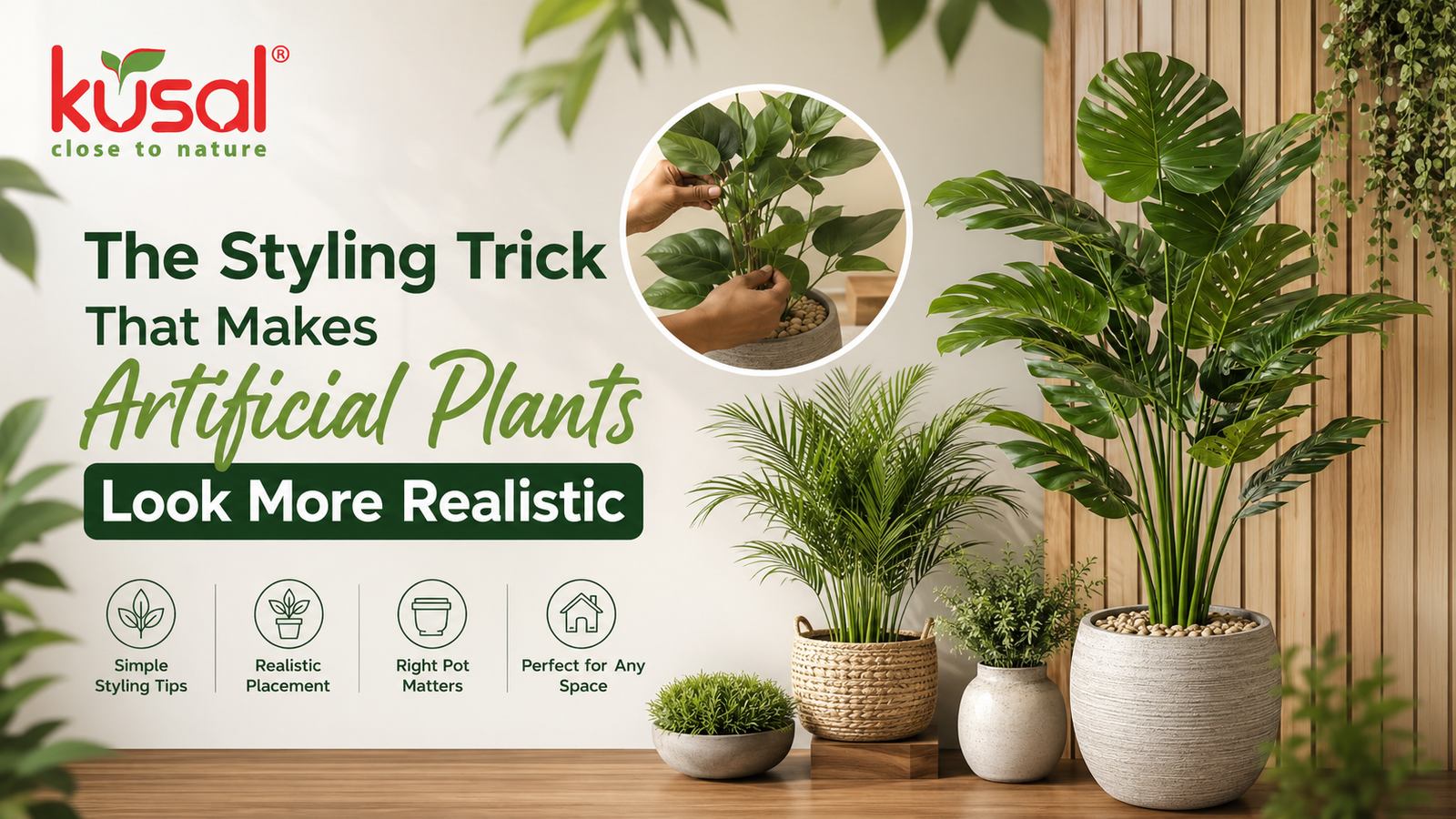
Artificial plants have come a long way from the shiny plastic versions many people remember from years ago. Today, high-quality artificial greenery can look surprisingly close to the real thing. Yet, even the best plant can still look artificial if it is placed or styled incorrectly.
The secret is not always the plant itself. More often, it is how the plant is styled within the space. Interior designers know that a few small adjustments can completely change the way an artificial plant is perceived. Instead of looking like a decorative accessory, it begins to feel like a natural part of the room.
If you are planning to use Artificial Plants in Chennai for your home, office, café or showroom, these styling tricks can make a noticeable difference.
Why Some Artificial Plants Look Fake
When people say an artificial plant looks fake, they are usually reacting to one of three things:
- Perfectly shaped leaves
Real plants are rarely symmetrical. - Unnatural placement
A plant sitting in the center of a room with no surrounding décor often looks staged. - Incorrect pot size
A large plant in a tiny pot immediately looks unrealistic.
These issues are easy to fix without replacing the plant.
The Most Effective Styling Trick: Create Imperfection
The biggest mistake people make is leaving every leaf exactly as it arrived from the box. Manufacturers often pack plants tightly for shipping, which creates a uniform shape.
Before placing the plant, spend a few minutes adjusting it by hand:
- Gently bend a few stems outward.
- Rotate some leaves in different directions.
- Allow a few branches to sit slightly lower than others.
- Avoid creating a perfect circle or dome shape.
This small step adds the irregularity that real plants naturally have.
Choose the Right Pot
A beautiful artificial plant can lose its realism if the pot looks too small, too lightweight, or too decorative for the space.
For a more natural appearance:
- Use a pot that feels proportionate to the plant’s height.
- Choose matte finishes instead of overly glossy ones.
- Consider textured FRP, ceramic, or stone-look planters.
- Add a layer of pebbles, bark chips, or moss on top of the base.
The visible surface around the stem is often what convinces people the plant is real.
Layer It with Other Décor
A single plant standing alone can look like a showroom display. A plant surrounded by complementary objects feels integrated into the room.
Try pairing it with:
- A floor lamp
- Books or magazines
- A woven basket
- A small side table
- Wall art
- A rug
These surrounding elements help the plant become part of a larger visual story.
Mix Different Shades of Green
Real plants rarely have a single uniform color. Leaves naturally vary in tone.
If you are decorating a larger area, combine:
- Deep green foliage
- Lighter green accents
- A few variegated leaves
- Different leaf sizes and textures
This creates depth and prevents the arrangement from looking manufactured.
Use Height Variation
A room filled with plants of identical height can look artificial very quickly.
A more natural arrangement includes:
- One tall statement plant
- One medium-height plant
- One smaller tabletop plant
The variation creates visual movement and resembles how plants appear in nature.
Don’t Forget Lighting
Lighting has a huge impact on realism.
Warm ambient lighting works particularly well because it:
- Softens leaf edges.
- Reduces plastic-like reflections.
- Creates natural-looking shadows.
- Adds depth to the foliage.
Many commercial spaces in Chennai now use subtle spotlights or warm LED lighting near plant installations for this reason.
A Quick Before-and-After Example
Before
- Tall plant in a small glossy pot
- Leaves tightly packed together
- Placed alone in a corner
- Bright white overhead light
After
- Plant moved to a larger textured pot
- Leaves adjusted into uneven positions
- Pebbles added at the base
- Placed beside a chair and floor lamp
- Warm ambient lighting added
Why This Matters for Chennai Homes
Many homeowners want greenery without the constant maintenance required by real plants in hot and humid conditions. High-quality artificial plants offer that convenience, but styling determines whether the result looks premium or temporary.
Whether you live in a compact apartment, a villa, or are designing a commercial space, the goal is not simply to add a plant. The goal is to make the greenery feel as though it has always belonged there.
Final Thoughts
The most effective way to make an artificial plant look realistic is surprisingly simple: stop treating it like a product and start treating it like a real plant.
Adjust the leaves, choose a suitable planter, place it in a believable location, and integrate it with the surrounding décor. These small details create the natural imperfections that our eyes associate with real greenery.
When styled thoughtfully, artificial plants can bring warmth, balance, and visual freshness to a space while requiring very little maintenance. In many modern interiors, the difference between obviously artificial and convincingly realistic comes down to a few careful styling decisions rather than the plant itself.
FAQ’s
1. How can I make my artificial plant look more realistic?
The easiest way is to reshape the leaves and stems so they do not appear perfectly symmetrical. Adding pebbles or moss to the planter also improves realism.
2. What type of pot works best for artificial plants?
Textured FRP, ceramic, or stone-look pots generally look more natural than lightweight glossy plastic planters.
3. Where should I place artificial plants in a room?
Place them in locations where a real plant would normally be found, such as near windows, beside sofas, or in corners with other decorative elements.
4. Do artificial plants look better under warm lighting?
Yes. Warm ambient lighting softens reflections and creates more natural shadows, which helps the foliage appear more realistic.
5. Are artificial plants suitable for homes in Chennai?
Yes. Artificial plants are a practical option for Chennai homes because they provide a green aesthetic without the watering, pruning, and maintenance that real plants often require in hot and humid conditions.

Leave A Comment